By Fr. David Barnes
•
October 21, 2026
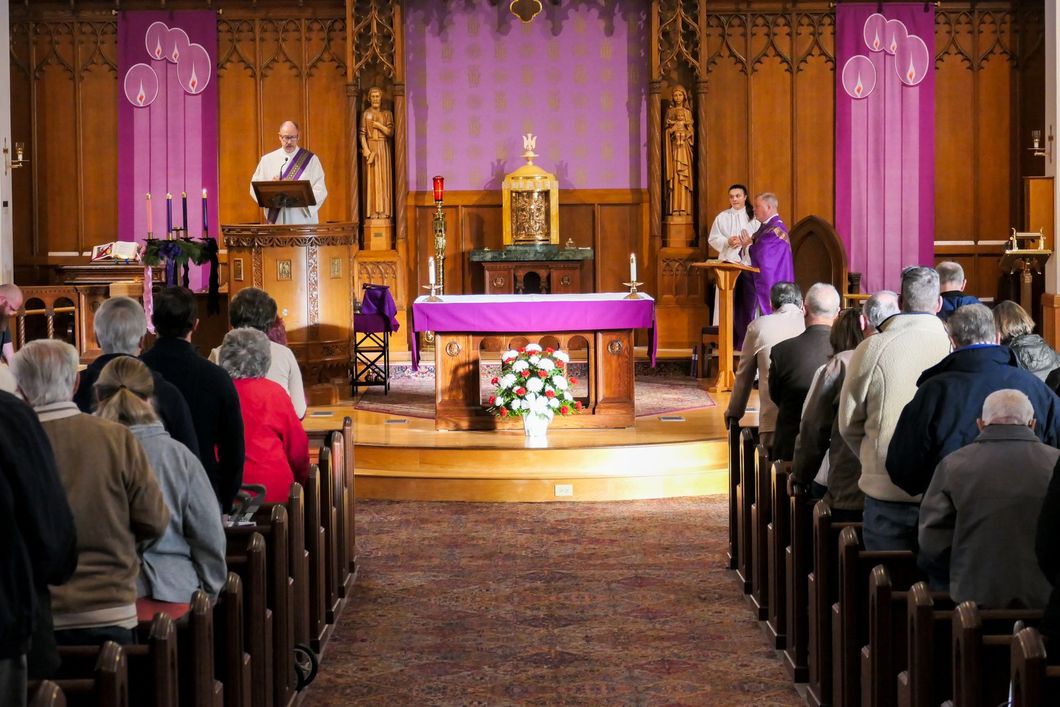
As I often mention, on the cover of our bulletin each week are the words, “Beauty, Goodness, Truth, and Friendship in Christ.” These words arise from both experience and from aspiration. They are something that is already present for the follower of Christ and they remain something for which we continuously long to encounter with greater intensity. The Christian people become a sign of these realities and help one another to enter into the mysteries in a deeper way. The Funeral Mass last week for my Dad was such a profound consolation to me and to my family. In that Mass, I experienced beauty, goodness, truth, and friendship in Christ. For Christians, funerals are not intended to explain away grief, to provide quick and meaningless resolutions, or to offer platitudes. Instead, I think the Funeral Mass affords us the opportunity to enter into the mystery of life and death in a more profound way. When we try to skip over the mystery in order to get to a “solution,” it deprives us of something essential. During these past weeks, what has sustained and strengthened me was encountering so much beauty, goodness, truth, and friendship in Christ. The palpable presence of these realities did not explain away death and sorrow, but surrounded it in love and made clear that love is stronger than death. I am profoundly grateful to the clergy and staff of St. Patrick Parish whose goodness and charity made these weeks so much easier. I am also very grateful to those parishioners who, through word and deed, have expressed such beautiful charity towards my family and me. In the days leading up to the Funeral Mass, I wondered if it would all be a blur to me. I wondered if I would be anxious or too emotional. Instead, the Lord gave me such a beautiful gift. I was completely at peace. Others attended to all of the details so that I could simply focus on offering the Mass and preaching. The surprising presence of people from throughout my life was so enormously consoling. So many of them were there because over the course of years, together we had encountered beauty, goodness, and truth, and had lived together in friendship in Christ. Many who attended the funeral told me how beautiful it was to see so many priests (and Cardinal Sean) in attendance. The presence of my brother priests at that moment will be something I will never forget. I was so surprised that so many priests came to pray for my Dad and support my family and me. It fills me with profound gratitude. At the very center of my Dad’s funeral was not my Dad. At the very center of it was Jesus Christ. In the beauty, goodness, truth, and friendship that I meet in the life of the Church, Christ makes himself known to me and this is what brings consolation. As I continue to absorb all that has occurred in the past month or so, I continuously feel deep gratitude. Thank you to all of you for your kind expressions of sympathy, your presence at the funeral, and your promises of prayers. They all assure me of the truth of the Resurrection and of the presence of Christ. In these days, in the midst of sorrow, I have encountered beauty, goodness, truth, and friendship in Christ and my heart is filled with gratitude. Your Brother in Christ, Fr. David Barnes